


Share This Article
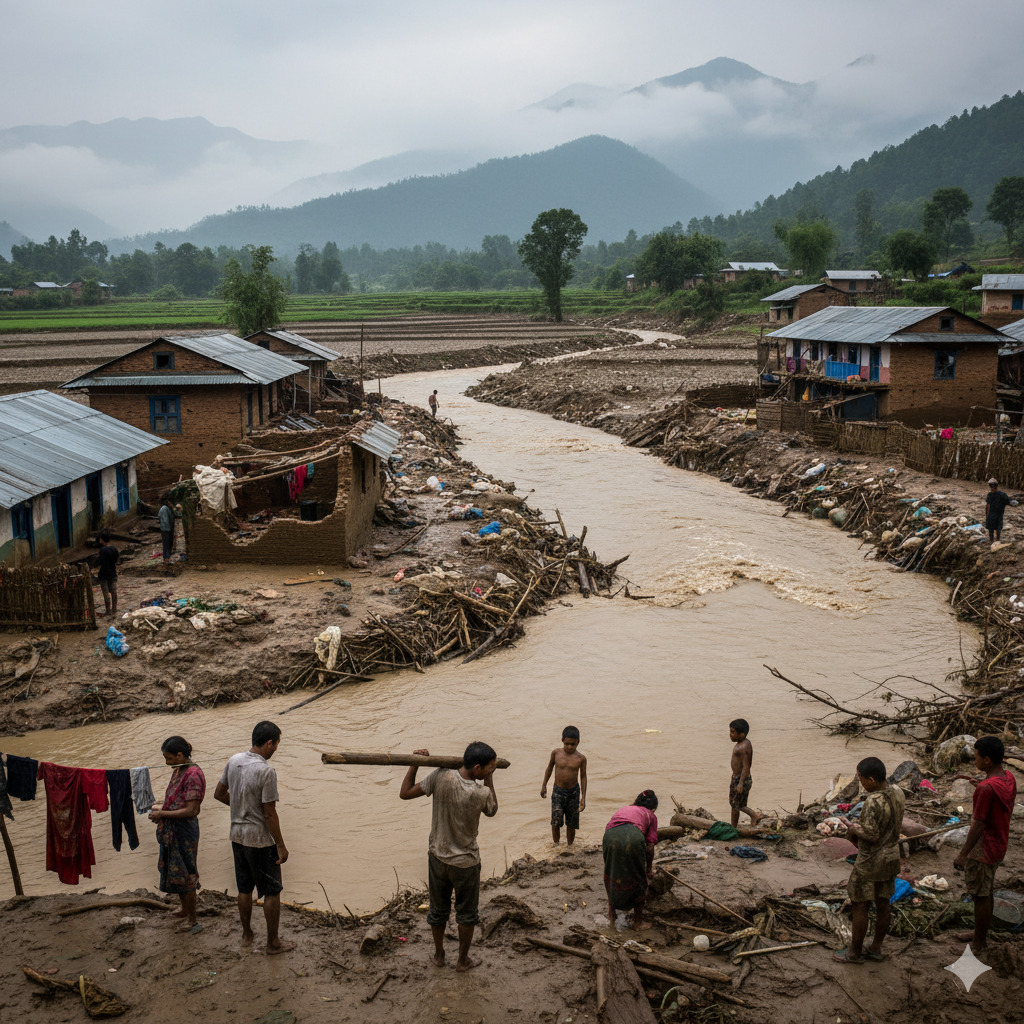
Kathmandu — Following weeks of relentless monsoon rains, Nepal is now grappling with widespread destruction caused by floods and landslides across multiple districts. The government has estimated the cost of reconstruction to be approximately Rs 12.38 billion, or 12 arba, with road infrastructure taking the largest share of the budget.
The Ministry of Physical Infrastructure and Transport released the figures earlier this week, highlighting the urgent need to restore highways, bridges, and rural roads that were severely damaged. According to officials, Rs 10.68 billion will be allocated to rebuild major highways, alternative routes, Bailey bridges, and permanent structures. An additional Rs 1.70 billion has been set aside to complete repairs from last year’s monsoon damage that remain unfinished.
Minister Kulman Ghising stated that restoring road connectivity is the government’s top priority. “We are mobilizing all available resources to reopen blocked routes and ensure safe passage for relief and recovery efforts,” he said. “The damage is extensive, but we are committed to rebuilding stronger and safer.”
The floods, triggered by unusually heavy rainfall, affected dozens of districts including Sindhupalchok, Dolakha, Myagdi, and Ramechhap. Rivers overflowed their banks, sweeping away homes, farmland, and critical infrastructure. Landslides buried entire stretches of road, isolating communities and disrupting supply chains. In many areas, rescue teams had to rely on helicopters and foot patrols to reach stranded residents.
Local governments have reported significant losses in agriculture, housing, and public facilities. Thousands of families have been displaced, and temporary shelters have been set up in schools and community centers. However, overcrowding and poor sanitation have raised concerns about potential outbreaks of waterborne diseases.
Experts warn that the reconstruction cost could rise further if additional damage is uncovered or if rebuilding efforts are delayed. “We need to act quickly, but also carefully,” said Ramesh Karki, a civil engineer based in Kathmandu. “Rebuilding the same vulnerable roads without addressing the underlying risks will only repeat the cycle of destruction.”
In response to the crisis, the government is considering long-term strategies to improve resilience against future disasters. These include elevating roadbeds, reinforcing embankments, and installing early warning systems in flood-prone areas. The Ministry of Urban Development is also working with local authorities to assess high-risk zones and explore relocation options for vulnerable settlements.
Beyond the physical damage, the floods have taken a heavy human toll. Dozens of lives were lost, and many families are still searching for missing loved ones. Relief agencies, including the Nepal Red Cross and international NGOs, are providing food, water, and medical aid, but logistical challenges persist due to damaged roads and communication blackouts.
Residents in affected areas have expressed frustration over the lack of preparedness and the slow pace of recovery. “Every year we face floods, and every year we suffer,” said Maya Tamang, a farmer from Ramechhap. “We need more than promises—we need action.”
Truck drivers, traders, and small business owners have also been hit hard. Rajendra Shrestha, who drives a freight truck between Kathmandu and Pokhara, said his route has been blocked for over two weeks. “My livelihood depends on these roads. Until they’re fixed, I can’t earn,” he said.
Nepal has appealed to international partners for technical and financial assistance. Countries like India, China, and Japan have offered support, while multilateral agencies such as the Asian Development Bank and the World Bank are assessing funding options for long-term reconstruction.
Climate experts have pointed to the increasing frequency and intensity of monsoon disasters as a sign of global climate change. “Nepal’s vulnerability is a wake-up call for the region,” said Dr. Anjali Thapa, a climate scientist. “We must invest in adaptation and resilience now.”
As Nepal begins the long road to recovery, the Rs 12.38 billion reconstruction plan marks a critical step toward restoring normalcy. But experts caution that rebuilding must go hand-in-hand with reform—better planning, stronger enforcement of building codes, and community engagement.
The road ahead is steep, both literally and figuratively. Yet with coordinated efforts, transparent governance, and international solidarity, Nepal can emerge stronger from this crisis.
More reads about cement