


Share This Article
In the world of crushing equipment, two names come up more than anything else: Jaw crusher and cone crusher. Both are essential in mining, quarrying, road construction, and building projects. Although they perform the same job—reducing large stones into smaller sizes—their design, working principle, and applications are very different. Understanding these differences helps companies choose the right machine, reduce cost, and improve productivity.
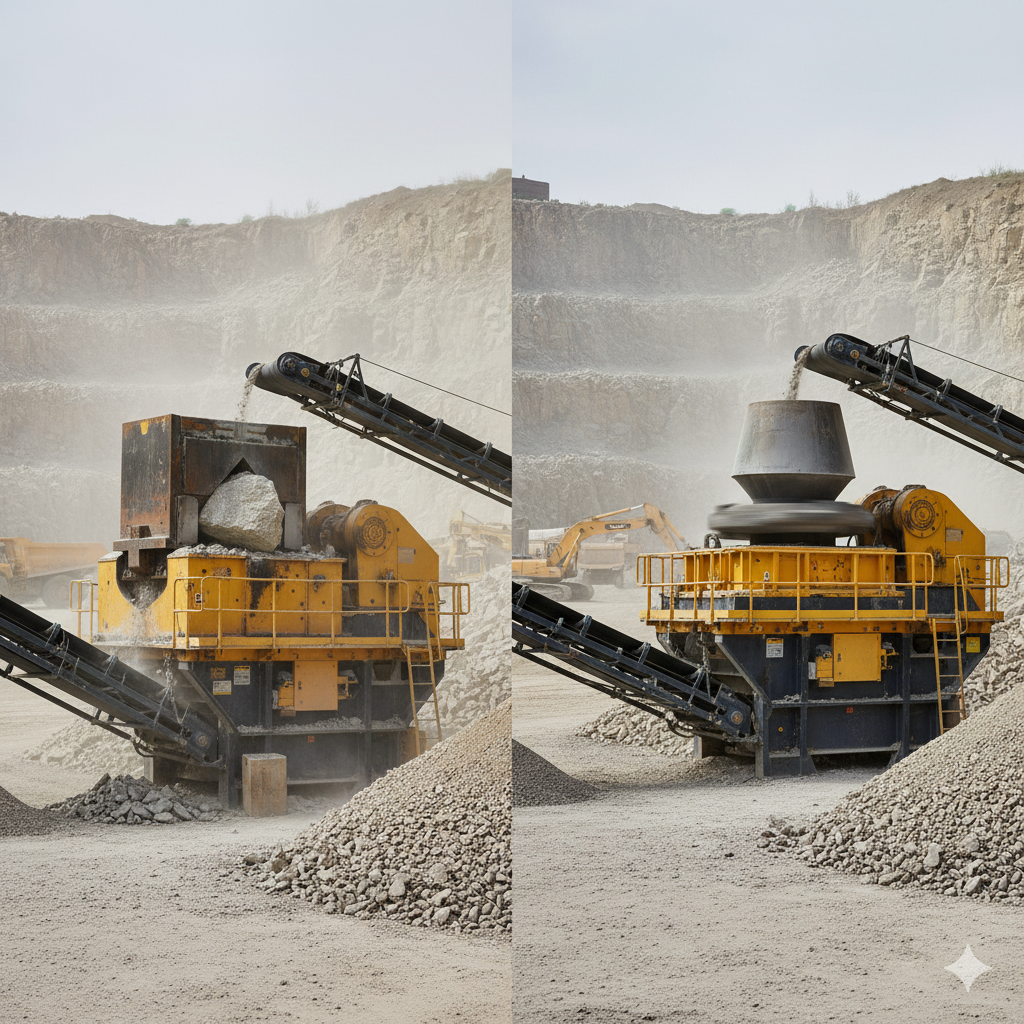
How a Jaw Crusher Works?
A jaw crusher machine in Nepal uses two plates, commonly called jaws, to crush material. One jaw stays in a fixed position while the other moves back and forth in a compressing motion. Large rock enters through the top, and as the jaw moves, the rock gets crushed into smaller pieces until it fits through the bottom opening.
Jaw crushers are known for:
1. Simple design
2. Low maintenance
3. High crushing ratio
4. Ability to handle very hard and abrasive stones
Because of their powerful primary crushing ability, jaw crushers are mostly used at the beginning of the crushing process. They break down large boulders into manageable sizes before the material moves to secondary crushers.
How a Cone Crusher Works?
A cone crusher machine in Nepal works differently. Instead of two flat jaws, it uses a cone-shaped mantle that rotates inside a steel bowl. As the cone moves, it compresses rock against the bowl, gradually reducing it into finer and more uniform pieces.
Cone crushers are known for:
1. Producing finer output
2. Higher productivity for secondary and tertiary crushing
3. Better shaping and gradation of final product
4. Strong performance with hard and medium-hard materials
Because of this design, cone crushers are popular in aggregate production, asphalt plants, concrete manufacturing, and mining industries where smooth, consistent stone sizes are needed.
Major Differences Between Jaw Crusher and Cone Crushers
1. Application Stage
- Jaw Crusher: Used for primary crushing. It takes large raw stones directly from mines or blasting sites.
- Cone Crusher: Used for secondary or tertiary crushing. It receives material that is already smaller, then refines it.
2. Output Size
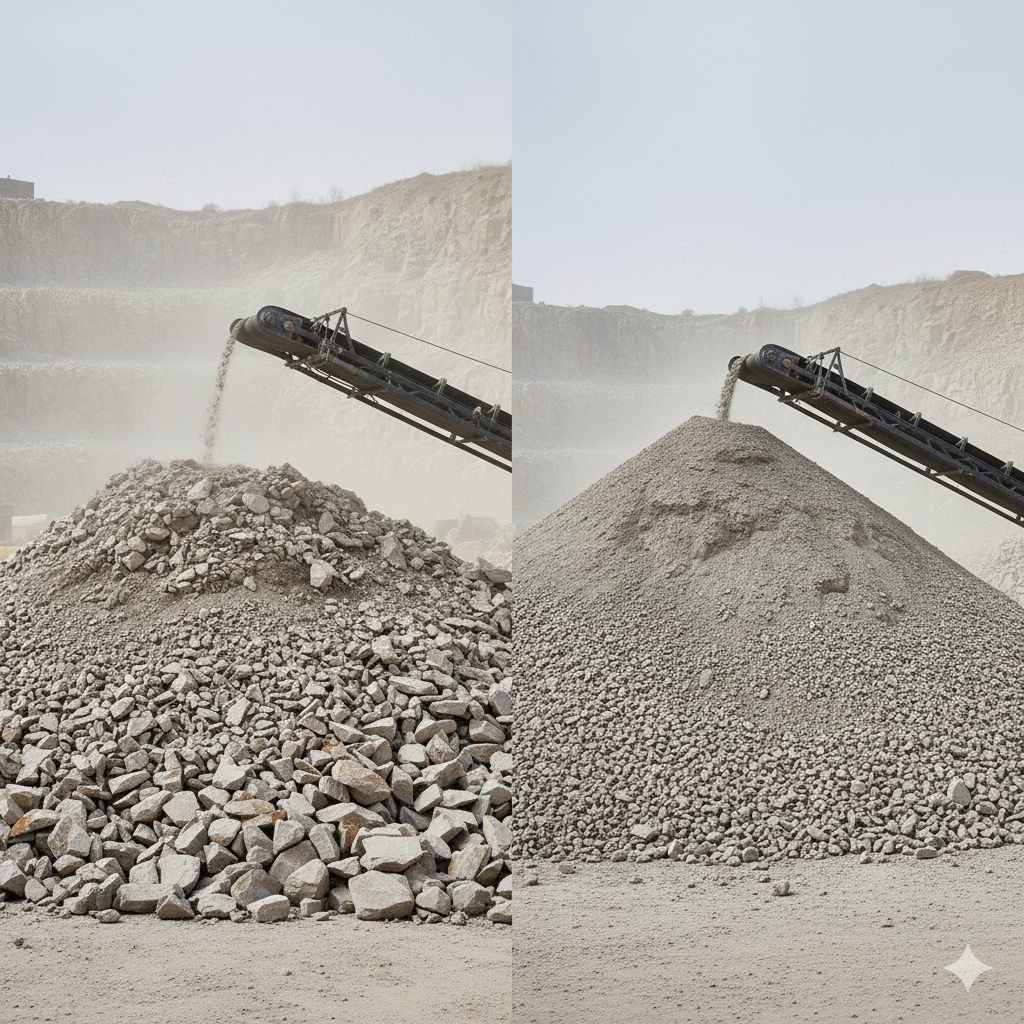
- Jaw crusher produce rough, irregular stones—ideal for further processing.
- Cone crusher create finer, uniform aggregates suitable for road base, concrete, and asphalt.
3. Shape of Final Product
- Jaw crusher output has sharper edges and uneven texture.
- Cone crusher output is more rounded, smooth, and cubical—perfect for construction.
4. Capacity and Efficiency
- Jaw crushers handle very large feed sizes but have lower output volume compared to cones.
- Cone crushers can process more tons per hour, making them ideal where high production is required.
5. Wear and Maintenance
Jaw crushers machine in Nepal have fewer wearing parts and are easy to maintain. Cone crushers have more moving components, so maintenance is slightly more complex. However, cones generally offer longer wear life when crushing hard stone.
6. Energy Consumption
- Jaw crushers use mechanical pressure and often consume less power.
- Cone crushers require more energy but deliver superior shaping and gradation.
Which One Should You Choose?
The right crusher depends on the job:
Choose a Jaw Crusher if:
- You need to break very large hard stones
- You want simple operation and low maintenance
- You are at the primary crushing stage
Choose a Cone Crusher if:
- You need fine material for concrete, asphalt, or road construction
- Productivity and final product quality are important
- You are handling already-crushed material
Many modern crushing plants use both machines together: jaw crusher first, cone crusher second. This combination gives excellent output quality while keeping running costs under control.
Advantages of Using Both Jaw and Cone Crushers in a Crushing Plant
- Higher production and efficiency
- Better stone shape and size control
- Reduced loading on single machines
- Ideal for large construction and mining projects
This is why most quarry plants around the world operate a two-stage crushing setup.
Final Thoughts
Jaw and cone crushers are both powerful machines, but they serve different purposes. A jaw crusher is the workhorse for primary crushing, while the cone crusher is the specialist for producing fine, high-quality aggregates. Companies that understand the difference can choose the right machine, reduce cost per ton, and improve project performance.
Whether it’s road building, hydropower, mining, or commercial construction, selecting the correct crusher is a key step toward successful production.
More reads about top excavators to buy