


Share This Article
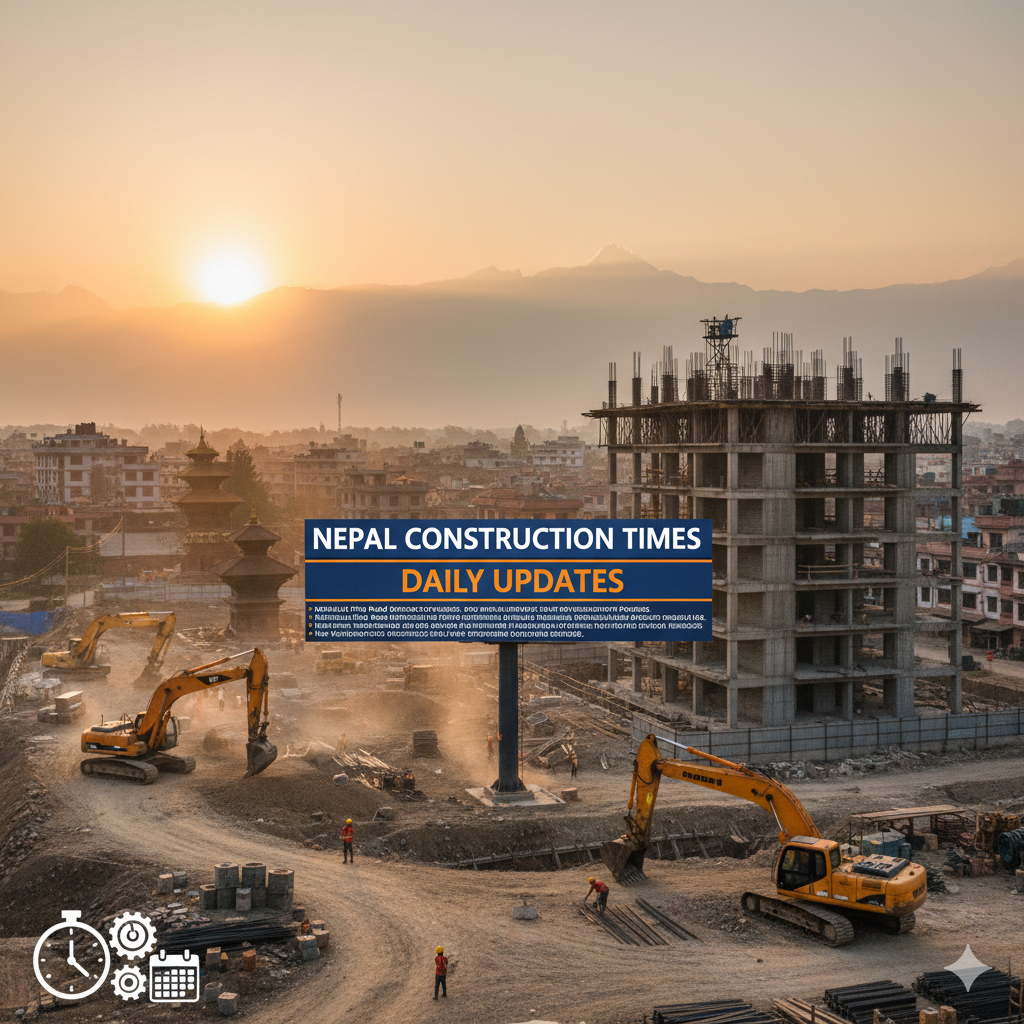
Kathmandu — Infrastructure activity in Nepal continues, with several major road and water-sector projects showing progress — though energy/investment projects still face delays in remote regions. Below is a snapshot of developments across multiple sectors:
Roads & Highways: Ongoing Expansion & Contract Clean-up
- The widening of the Suryabinayak‑Dhulikhel Road — part of the larger Araniko Highway corridor — has officially hit 50% progress. Works on both packages (Suryabinayak–Sanga and Sanga–Dhulikhel) remain active, with retaining walls, drainage and preliminary paving already underway.
- Meanwhile, authorities have terminated 25 previously “sick” road-construction contracts in Kathmandu and surrounding areas, after repeated non-performance, signaling a stricter approach toward completion of stalled roadwork.
Water Infrastructure & Urban Services: Treatment Expansion for Kathmandu Valley
- The firm VA TECH WABAG has recently won a major repeat contract to build a new 255 million litres/day water-treatment plant at Sundarijal for Kathmandu Valley. This expansion aims to strengthen long-term water security and address rising urban demand.
- The project signals renewed attention toward upgrading urban water supply infrastructure — a key need for Nepal’s rapidly growing urban populations.
Energy & Power Transmission: Delays Continue in Some Regions
- The planned expansion of the 132 kV transmission line in the Karnali region (Kohalpur–Surkhet route) remains unfinished — even after over five years. Delays stem from issues such as tower-site disputes, tree-felling permissions, and site-access interruptions. As a result, many households in remote districts continue to face low-voltage supply or frequent outages.
- Local business and households report the ongoing power shortage as a major obstacle to industrial growth and local development in those areas.
What This Means for Nepal’s Construction Outlook
- The active expansion of the Suryabinayak–Dhulikhel road — coupled with contract clean-ups — suggests more disciplined execution of highway projects. That may boost overall connectivity in the Kathmandu Valley and surrounding districts.
- The water-treatment plant approval in Sundarijal reflects growing recognition of urban infrastructure needs. As water supply becomes more secure, demand for complementary construction (pipelines, distribution networks, related civil works) is expected to rise.
- On the energy side, persistent delays in power-transmission expansion highlight structural challenges — especially in remote regions. Until transmission networks are reliably extended, industrial or large-scale construction activity in those regions may remain constrained.